Herbal Insights
Cinnamon: From Ancient Spice to Healing Medicine
SPICE & HERB CINNAMON
THE REMARKABLE JOURNEY FROM ANCIENT SPICE TO HEALING MEDICINE
A Story of Trade, Tradition, and Therapeutic Power
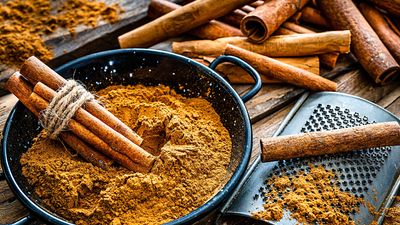
When most people think of cinnamon, they picture a fragrant kitchen spice added to tea, desserts, and holiday recipes. Few realize that cinnamon has a medicinal history spanning more than 3,500 years and has influenced the rise and fall of empires, fueled international trade, and earned a respected place in traditional healing systems around the world.
The story of cinnamon is not merely the story of a spice. It is the story of one of humanity's oldest medicinal plants.
The Ancient Origins of Cinnamon
The earliest recorded use of cinnamon dates to approximately 1600 BCE in ancient Egypt. Egyptians valued cinnamon as a luxury item and used it in several important ways:
As an ingredient in sacred incense
As an aromatic perfume component
As a spice used in embalming rituals for mummification
At that time, cinnamon was imported into Egypt through African and Arabian trade routes. Historians are uncertain whether this cinnamon originated from Sri Lankan true cinnamon (Cinnamomum verum) or Chinese cassia cinnamon (Cinnamomum cassia). To the Egyptians, its exact source was less important than its rarity and value.
Because cinnamon traveled thousands of miles before reaching Egypt, it became one of the most expensive commodities in the ancient world, often worth more than precious metals.
The Mystery of Cinnamon
By the eighth century CE, Arab merchants controlled much of the cinnamon trade between Asia and Europe.
To protect their lucrative business, they carefully guarded the secret of cinnamon's origin. They invented elaborate stories describing cinnamon-growing regions as dangerous and inaccessible.
According to one legend, giant birds collected cinnamon bark to build nests on cliffs beyond human reach. Traders claimed that only by placing large pieces of meat below the nest could the birds be tricked into dropping the cinnamon.
These tales helped maintain exceptionally high prices while preventing competitors from locating the true source.
For centuries, Europeans purchased cinnamon without knowing where it actually came from.
The Discovery of Sri Lanka and the Cinnamon Wars
The mystery was finally solved during the Age of Exploration.
In the early 1500s, Portuguese explorers reached Sri Lanka and discovered extensive forests of cinnamon trees growing naturally along the island's coastline.
Recognizing the immense value of the spice trade, Portugal quickly occupied parts of the island and monopolized cinnamon production.
The Portuguese domination did not last forever.
The Dutch East India Company eventually forced the Portuguese out and assumed control of the cinnamon trade. Later, the British challenged Dutch power and gained influence over the region.
For centuries, these colonial powers competed fiercely for control of territories capable of producing cinnamon.
Few plants in history have triggered such prolonged economic and political competition.
Cinnamon's Parallel Story in Chinese Medicine
While European nations fought over cinnamon's commercial value, Chinese physicians were developing a deep understanding of its medicinal properties.
In Traditional Chinese Medicine (TCM), cinnamon became one of the most respected warming herbs.
Ancient physicians observed that cinnamon:
Warmed the body
Increased circulation
Relieved cold-induced pain
Supported vitality
Helped the body fight external pathogens
Over time, Chinese medicine differentiated cinnamon into two distinct medicinal substances:
Gui Zhi (Cinnamon Twig)
Gui Zhi refers to the young twigs of the cinnamon tree.
Its functions include:
Releasing exterior wind-cold
Harmonizing Ying and Wei Qi
Promoting circulation in the muscles and channels
Relieving stiffness and mild pain
Gui Zhi became one of the most important herbs in the classical formula Gui Zhi Tang, first described in the Shang Han Lun (Treatise on Cold Damage).
Rou Gui (Cinnamon Bark)
Rou Gui refers to the mature bark of the cinnamon tree.
Its functions include:
Warming Kidney Yang
Warming Spleen Yang
Restoring internal warmth
Dispersing deep cold
Improving circulation
Moving blood and relieving pain
Rou Gui is often compared to adding fuel to a fireplace. It helps revive the body's internal "fire" when vitality has become weak and cold.
Why Cinnamon Feels Warm
Anyone who has tasted cinnamon has likely experienced its warming sensation.
Ancient healers observed this effect long before modern science could explain it.
Today, researchers know that cinnamon contains compounds capable of stimulating temperature-sensitive receptors and influencing circulation.
These compounds contribute to the feeling of warmth that spreads throughout the body after cinnamon is consumed.
In Traditional Chinese Medicine, this same observation led practitioners to classify cinnamon as a "warming herb" capable of dispelling cold and strengthening Yang.
The Healing Chemistry of Cinnamon
Modern science has identified numerous bioactive compounds within cinnamon that help explain its traditional uses.
Cinnamaldehyde
Cinnamaldehyde is the compound responsible for cinnamon's characteristic aroma.
Research suggests that it may:
Promote healthy circulation
Support metabolic function
Provide antimicrobial activity
Help regulate inflammatory processes
Because of its warming and circulatory actions, cinnamaldehyde closely mirrors the traditional TCM description of cinnamon's ability to "warm the channels."
Eugenol
Eugenol is also found in clove and contributes to cinnamon's therapeutic effects.
Research suggests that eugenol may:
Reduce pain
Support healthy inflammatory responses
Provide antimicrobial protection
Benefit oral and dental health
From a TCM perspective, eugenol resembles cinnamon's ability to move blood and relieve pain caused by cold stagnation.
Linalool
Linalool is a fragrant terpene also found in lavender and many other aromatic plants.
Research suggests that linalool may:
Encourage relaxation
Support healthy sleep
Reduce anxious feelings
Protect nerve cells from oxidative stress
Its calming qualities complement cinnamon's warming actions, helping explain why cinnamon often feels both stimulating and comforting at the same time.
Beta-Caryophyllene
Beta-caryophyllene is one of the most fascinating compounds found in cinnamon.
Research suggests that it may:
Support the body's endocannabinoid system
Promote healthy inflammatory regulation
Reduce discomfort
Support emotional well-being
Modern researchers frequently study beta-caryophyllene for its unique ability to influence CB2 receptors associated with immune and inflammatory responses.
TCM and Biomedical Perspectives Compared
Traditional Chinese Medicine Modern Biomedical
Understanding Warms Yang Supports circulation and thermogenesis
Dispels Cold May improve blood flow and metabolic activity
Moves Blood Influences vascular function and inflammatory pathways
Releases Exterior May support the body's response to early infection
Harmonizes Ying and Wei May influence immune and autonomic regulation
Warms the Channels Improves microcirculation and tissue perfusion
Calms Shen Linalool and caryophyllene may support relaxation and mood balance
Although the language differs, both perspectives describe many of the same observed effects.
Common Therapeutic Applications
Throughout history, cinnamon has been used for:
Respiratory Support
Early-stage colds
Chills
Wind-cold invasion
Recovery from seasonal illness
Circulatory Support
Cold hands and feet
Poor peripheral circulation
Sensation of internal coldness
Pain Relief
Cold-induced joint pain
Muscle stiffness
Menstrual discomfort improved by warmth
Digestive Support
Sluggish digestion
Cold-type abdominal discomfort
Bloating aggravated by cold foods
Emotional Well-Being
Stress-related tension
Nervousness
Lack of vitality
A Legacy That Continues Today
The remarkable thing about cinnamon is that its historical uses, traditional applications, and modern scientific findings often point in the same direction.
Ancient Egyptians valued it as a sacred aromatic.
Arab traders protected it as a priceless commodity.
European empires fought wars over it.
Chinese physicians transformed it into one of the world's most important warming medicines.
Today, scientific research continues to uncover compounds such as cinnamaldehyde, eugenol, linalool, and beta-caryophyllene that help explain why cinnamon has remained relevant for thousands of years.
More than a spice, cinnamon is a bridge between ancient wisdom and modern science, reminding us that some of nature's most effective medicines have been in front of us all along.
Important Considerations and Contraindications
In Traditional Chinese Medicine (TCM), cinnamon is classified as a warming herb and is generally used for Cold and Yang Deficiency patterns. Because of its warming nature, cinnamon may not be appropriate for individuals who exhibit signs of Excess Heat, Internal Fire, or Yin Deficiency with Heat.
Use caution or seek professional guidance if you experience:
- Persistent hot flashes or night sweats
- Excessive body heat or sensations of internal heat
- Red face, red tongue, or pronounced inflammatory conditions
- Severe migraine headaches triggered by heat
- Dizziness or vertigo associated with Liver Yang Rising
- Active bleeding disorders or unusually heavy menstrual bleeding
- Acute infections accompanied by high fever
Individuals with digestive inflammation may also require careful evaluation before using cinnamon therapeutically. This includes those with:
- Active gastritis
- Stomach or duodenal ulcers
- Ulcerative colitis or active inflammatory bowel conditions
- Severe acid reflux (GERD)
- Persistent heartburn or esophageal irritation
Although cinnamon is generally safe in culinary amounts, therapeutic use should be individualized. Certain forms of cinnamon and concentrated supplements may interact with medications or be unsuitable for people with liver disease, pregnancy, or specific medical conditions.
Because proper herbal prescribing depends on identifying an individual's underlying pattern of imbalance, professional evaluation is recommended before using cinnamon medicinally.
Patient Takeaway
In Traditional Chinese Medicine (TCM), cinnamon is valued as a warming herb that helps support circulation, digestion, vitality, and the body's ability to overcome Cold patterns. Different parts of the cinnamon plant are used for different therapeutic purposes, making it an important herb in many classical formulas.
However, cinnamon is not appropriate for every individual or every condition. Because of its warming nature, it may not be suitable for people with significant Heat signs, active inflammatory conditions, severe hot flashes, certain headache or vertigo patterns, or active gastrointestinal irritation. In TCM, the safe and effective use of cinnamon depends on proper pattern differentiation rather than symptoms alone.
When used appropriately and under professional guidance, cinnamon remains one of the most respected herbs in Chinese medicine, demonstrating how a common kitchen spice can also serve as a valuable therapeutic tool.
© 2026 Shuyuan Hong. All rights reserved